

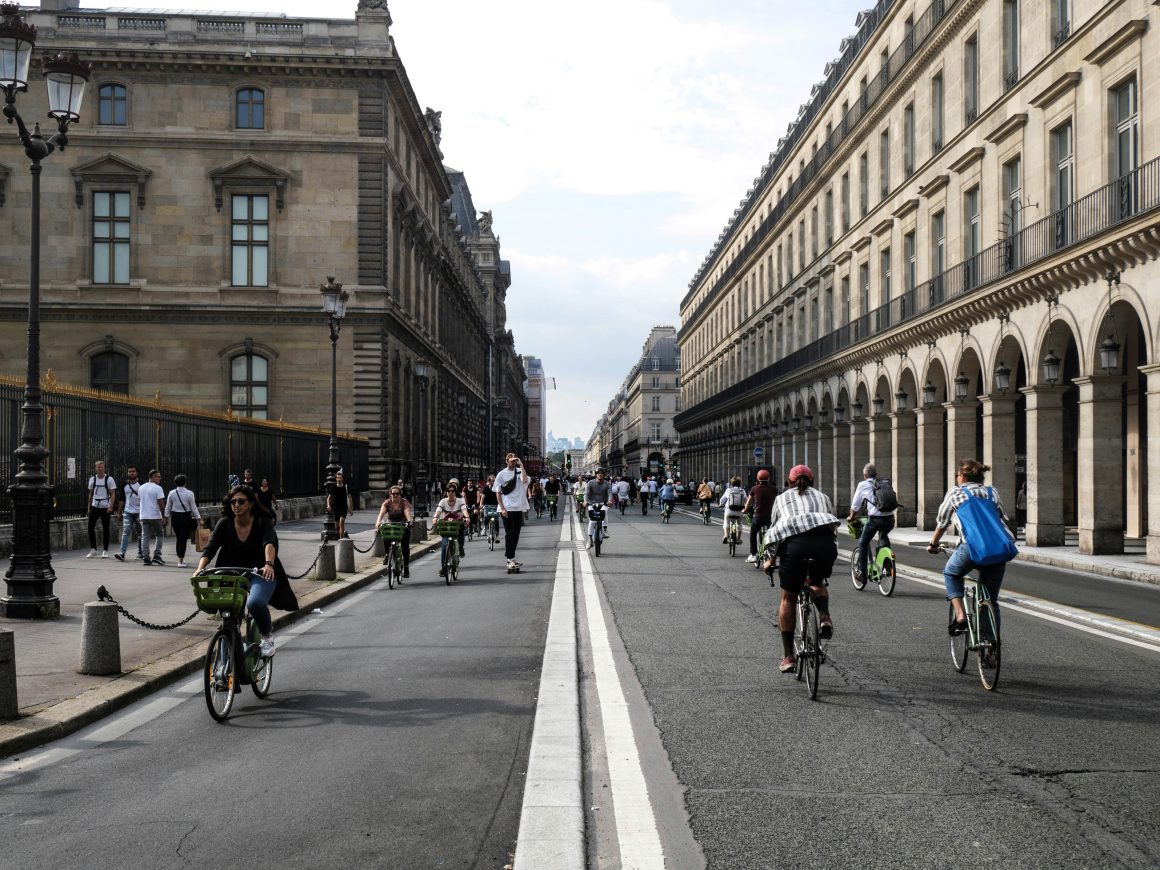
How Paris Beat the Car: Five Takeaways from a Remarkable Urban Transformation
The transformation of the French capital away from car dependency has become a global role model, despite being remarkably chaotic. Under Mayor Anne Hidalgo, Paris became “the most influential city in the world,” according to Canadian urbanist Brent Toderian.
Between 2002 and 2023, car traffic in Paris fell by more than half, while the city’s cycle lane network expanded sixfold. Today, bicycles account for more than twice as many trips as cars. Hidalgo, who is stepping down after twelve years in office, summed it up simply: “The bike beat the car.”
This Sunday and next, Parisians will elect a new mayor. The election is, in part, a referendum on cars. The leading candidates are Emmanuel Grégoire of the left, who broadly continues Hidalgo’s policies (despite their reportedly strained personal relationship), and the more car-friendly conservative politician Rachida Dati. So what lessons can be drawn from Paris’s transport revolution?
First Lesson: Reducing Car Use Improves Quality of Life for Most Residents
Paris has seen fewer traffic accidents, lower noise levels and cleaner air. More than 300 “school streets” have been pedestrianised, giving children space to play after school. The city has also become a sea of outdoor terraces: from April to October, cafés and restaurants are allowed to place tables in spaces once occupied by parked cars. After all, cities should not serve as storage areas for heaps of metal.
Second Lesson: Pushing Cars Out Does Not Harm the Urban Economy
Retailers often fear that reducing car access will drive away customers, but study after study shows that this is not the case. More broadly, critics of Anne Hidalgo should explain why Paris consistently ranks among the world’s top four business cities in international rankings compiled by organisations such as Oxford Economics, the Mori Memorial Foundation and Kearney.
Third Lesson: Car-Free Cities Must Provide Attractive Alternatives
Paris has done exactly that, with world-class public transport and an extensive cycling network. Only 28% of Parisian households own a car. However, Paris itself is a relatively small city of around 2.1 million inhabitants. For the roughly five million people living beyond the ring road in the Greater Paris metropolitan area, mobility is more challenging.
The situation is improving. Between 2024 and 2031, 68 new suburban metro stations are scheduled to open. The suburbs are also expanding their cycling infrastructure, while e-bikes are making longer commutes increasingly feasible. Still, according to Jean-Louis Missika, Paris’s former deputy mayor for urban planning, suburban areas also need dedicated rapid bus corridors to connect residents efficiently to rail and metro stations.
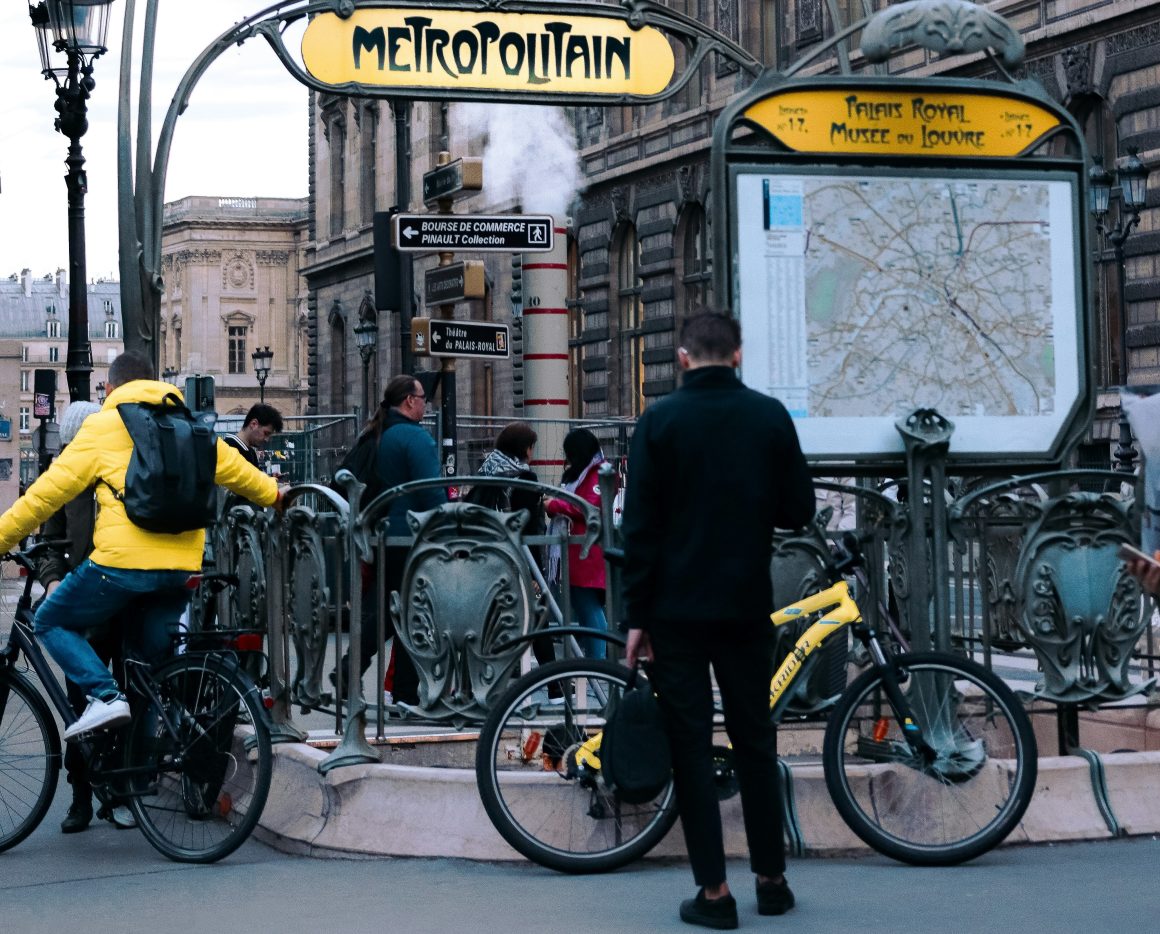
Parisians get along just fine without cars
Fourth Lesson: Cities Need to Get Deliveries Under Control
In Paris, deliveries are often made by vans parked in double rows, contributing to congestion and inefficiency. A study by the Massachusetts Institute of Technology (MIT) found that delaying deliveries by just five minutes could reduce the distance travelled by delivery vehicles by around 30%, as it would allow logistics providers to consolidate parcels more effectively.
Achieving this, however, requires cities to address a broader challenge: gaining greater oversight of the technology companies operating on their streets and securing access to their data. According to Jean-Louis Missika, firms such as Waze and Google often possess a deeper understanding of how a city functions than the city authorities themselves.
Fifth Lesson: Cities Must Also Regulate Cyclists
Aggressive cycling can endanger pedestrians. Early motorists behaved in much the same way before traffic rules and regulations were introduced. That is why mayoral candidate Emmanuel Grégoire—who was once fined for cycling while wearing headphones—has pledged stricter enforcement.
Yet even his rival, Rachida Dati, has no intention of dismantling Paris’s cycling infrastructure. She promises to “preserve the place of the bicycle” and even add some new cycle lanes. At the same time, however, she advocates cheaper and more abundant parking for cars. This highlights a fundamental reality of dense cities: not every mode of transport can occupy the same space to the same extent. A victory for Dati could slow the global movement toward reducing car dependence in cities.
Jean-Louis Missika believes that urban car ownership will continue to decline regardless of political decisions.
“Cars are the most absurd means of transport in a city. They are parked 95% of the time. It takes a two-tonne machine to move a person who weighs 70 kilograms. And the denser the city, the more absurd it becomes.”
He also predicts that autonomous robotaxis will further accelerate the decline of private car ownership. After proving themselves in American and Chinese cities, they are expected to begin operating in London this year. Unlike privately owned cars, robotaxis can remain in near-constant use, eliminating the need for valuable parking space in city centres, while their operating costs are expected to fall over time.
This trend builds on a transformation that began with Uber: car travel is increasingly becoming a service rather than a product that people need to own. Small autonomous buses—often called robobuses—have already begun operating in a number of cities. Other places may be leading the next phase of this transition, but Paris was undoubtedly the queen of the last one.
Do you like what we do at AutoMat? Support us and feed AutoMat with any amount. Thank you!


Nakrmte AutoMat
Podpořte nás a staňte se tak členy Klubu přátel AutoMatu!