


Best strategies for tackling speeding
Drivers who exceed the speed limit are responsible for approximately one third of all deaths in traffic accidents. To slow them down and save lives, cities have several effective tools at their disposal.
You may remember from high school physics: KE = ½ mv². In simple terms, the kinetic energy of a moving object is calculated as half its mass multiplied by the square of its velocity.
This simple equation has major implications for road safety. Because velocity is squared in the formula, even a small increase in speed dramatically increases the force involved in a collision involving a motor vehicle. Pedestrians and cyclists are especially vulnerable.
According to research by the AAA Foundation for Traffic Safety, a pedestrian’s chance of dying in a crash is about one in two if the vehicle is traveling at approximately 50 km/h, but only one in four if it is traveling at around 37 km/h.
Wasteful loss of life
Drivers with a heavy foot on the accelerator are among the biggest risks on the roads: in the United States alone, more than 10,000 deaths per year in traffic crashes are at least partly attributed to speeding (roughly one third of the total). Slowing them down would improve the alarming death rate in road traffic accidents. The situation is similar globally.
Over the past year, traffic safety expert David Zipper examined a range of measures that city officials can use to reduce speeding, such as speed bumps, automated traffic cameras, or converting one-way urban arterial roads into two-way streets. His analysis resulted in a new research report published within the MIT Mobility Initiative.
Unpopular? Not really
What he found is surprising. With rare exceptions, these speed-reduction strategies are effective—often remarkably so. And contrary to common assumptions, they are generally supported by residents. So why are these life-saving measures not being implemented everywhere?
To understand the relative benefits and popularity of different urban speed-control measures, he reviewed the academic literature and conducted interviews with 11 current or former urban transportation leaders across the United States. (Respondents were granted anonymity to speak openly.) He found that both researchers and city officials reach the same conclusion about speed management strategies: they simply work.
This straightforward assessment applies to automated speed cameras, which according to multiple studies discourage aggressive acceleration, as well as to increased police enforcement. One study, for example, identified an eight-week “halo effect” of reduced speeds following heightened police presence. Lowering speed limits also works. When Boston reduced its default speed limit from 30 mph to 25 mph in 2017, it led to a relative 29% drop in vehicles exceeding 35 mph compared to Providence, Rhode Island, where limits remained unchanged.
So-called “road diets” are also effective—street redesigns typically involving narrower lanes and sometimes added protective infrastructure. A Johns Hopkins research team concluded that 9- and 10-foot lanes lead to lower speeds and fewer crashes than 12- or 13-foot lanes. Among academics and transportation professionals, there is little dispute about the benefits of these and other measures, such as speed bumps or signal timing adjustments.
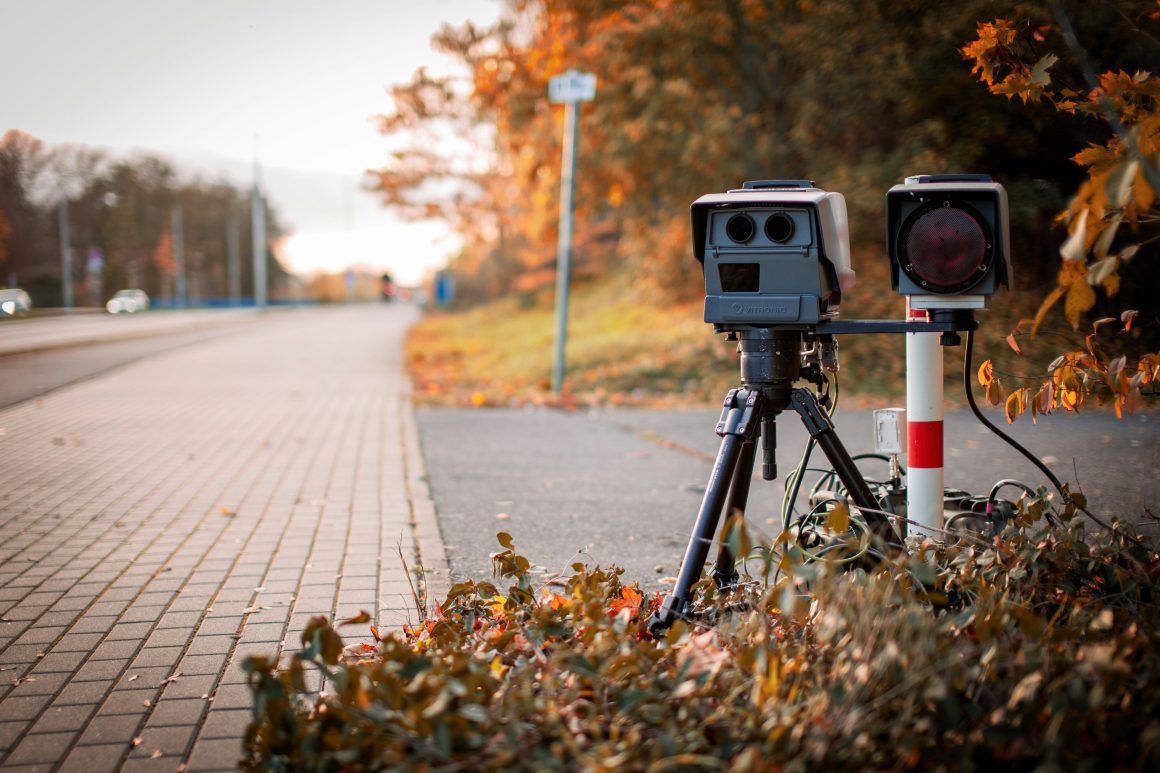
Strict enforcement of fines works
Awareness is not enough
However, there is one exception: public information campaigns (PSAs) designed to discourage speeding, such as a 2022 New York campaign featuring dramatic videos on YouTube. City officials agreed that these educational campaigns are ineffective. This view is also supported by research—the World Health Organization has classified PSAs as a road safety tool as “ineffective.”
City representatives also told Zipper that anti-speeding measures are generally strongly supported by the public, especially in lower-income neighbourhoods where the risk of death in traffic crashes is higher. Several leaders said their departments receive far more requests for speed bumps than they are able to implement. While academic research tends to focus more on effectiveness than popularity, earlier studies have found that automated cameras and safety-focused traffic enforcement enjoy consistently broad support.
Why are anti-speeding measures popular? A straightforward explanation is that residents recognize the threat that reckless speeding poses to health and lives. But that may not be the only reason. A study from last year by Kelcie Ralph, a transportation researcher at Rutgers University, found that most people mistakenly consider speeding far less dangerous than drunk driving or distracted driving.
Another possible factor, mentioned by officials, is the belief among some residents that it is “other people”—rather than locals—who speed through their neighbourhoods. As a result, people tend to support speed cameras that punish offenders, or road diets and speed bumps that force drivers to slow down (or, even better, choose a different route through another neighbourhood).
A false dichotomy
Whatever the causes, the relative popularity of anti-speeding measures may surprise those who regularly watch television news, which often highlights outraged reactions to speed cameras, lane reductions, and similar measures. As Zipper has previously argued in Bloomberg CityLab, journalists themselves may suffer from a so-called “windshield bias”—a distortion caused by spending many hours driving between locations. Media outlets also have an incentive to boost engagement by framing stories as controversial, even when most people actually agree.
Media coverage that exaggerates opposition to anti-speeding measures can slow reforms, because it leads politicians to believe that supporting them would be political suicide. But those fears are overstated.
And that may be the most important lesson about speed reduction policies: these measures can clearly save lives; researchers do not doubt their effectiveness. Even better, many residents support and welcome them. What is missing, however, are politicians willing to do what is right.
Join the Call Zero campaign and sign the pledge to show policymakers and officials that the safety of the most vulnerable road users should be a priority.



Nakrmte AutoMat
Podpořte nás a staňte se tak členy Klubu přátel AutoMatu!