

Vision Zero: A Traffic Engineer’s Perspective
Traffic engineers have long had a reputation for being primarily concerned with making car traffic flow as smoothly as possible. Yet the reality could not be more different, writes American engineer Wes Guckert for the urban planning website Planetizen.
It is no secret that the number of deaths among the most vulnerable road users is rising worldwide. Numerous analyses and reports document this trend. This difficult-to-explain increase is occurring despite nationwide efforts to promote Vision Zero — an initiative aimed at eliminating road deaths and serious injuries through measures such as lower speed limits, safer pedestrian crossings and cycle paths, average-speed cameras and other interventions. In fact, several cities have recently reported that the policy is failing, while officials in some local authorities are struggling to find a way to address the rising death toll from road crashes.
At first glance, it may therefore seem that Vision Zero has failed to deliver on its promise to save lives. The statistics — including those from the Czech Republic (editor’s note) — make for grim reading. It is important to recognise, however, that Vision Zero is much easier to promise than to put into practice. One of the biggest obstacles to its success is that too many cities and districts still operate according to a “mobility first” approach, prioritising the speed of motor traffic over safety. This culture encourages wide traffic lanes and infrastructure designed for high speeds — directly contradicting the principles of Vision Zero.
Theory vs. Practice
The way most local governments operate further complicates the situation. Vision Zero requires a comprehensive approach that puts safety first and encourages safe driving behaviour. However, different areas of local government — from urban planning and traffic engineering to traffic law enforcement — often operate separately, as isolated departments. This makes it difficult to implement the coordinated approach that Vision Zero demands.
Funding also remains a major obstacle for many Vision Zero programmes. Transport budgets often prioritise highway expansion over infrastructure improvements designed to increase safety, leaving many local authorities without sufficient resources to modernise infrastructure, raise public awareness or enforce traffic laws. Financial constraints can force cities to focus on only some aspects of Vision Zero while neglecting others. Limited enforcement of traffic regulations further undermines the programme’s effectiveness.
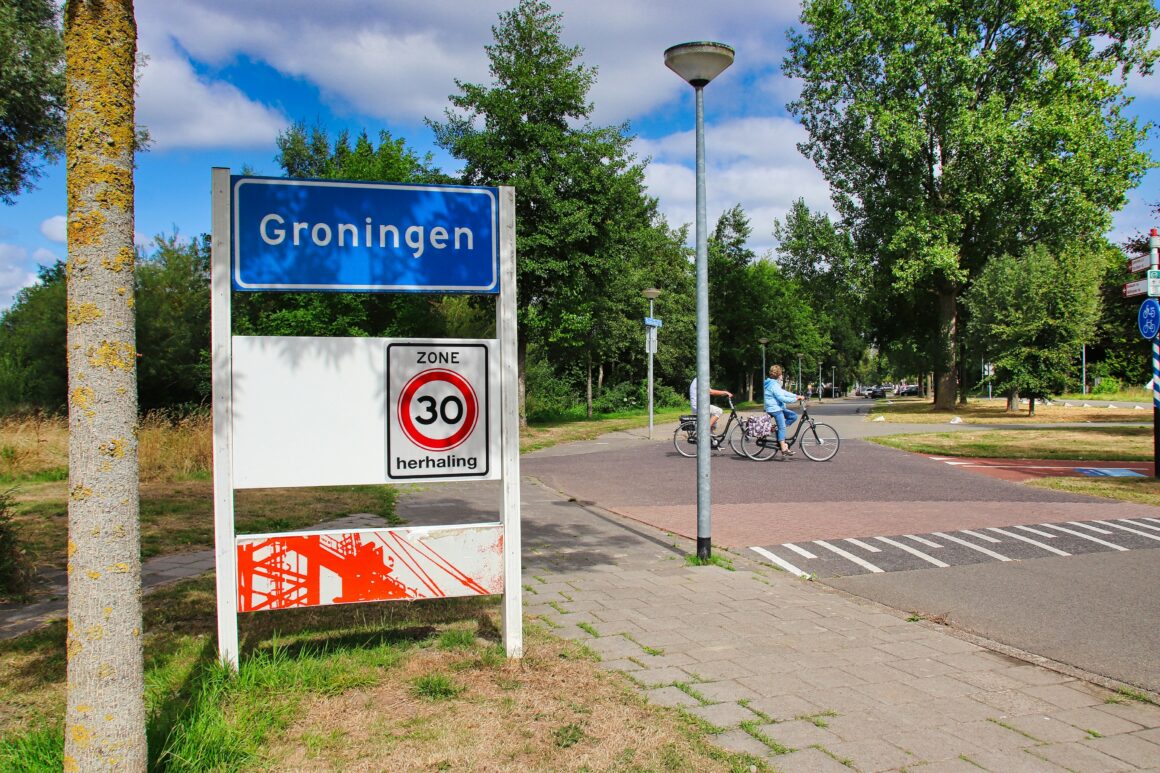
A default speed limit of 30 km/h is an effective tool for improving road safety
Significant Progress
Although these challenges have led to the suspension or cancellation of numerous Vision Zero programmes in the United States, it is important to remember that some cities, both in the US and elsewhere, have also achieved success. And their results are remarkable:
- Hoboken, New Jersey, for example, recorded eight consecutive years without a single traffic-related death.
- Austin, Texas, reported a 22% reduction in fatal and serious-injury crashes at selected intersections.
- Philadelphia saw a 34% reduction in fatal and serious-injury crashes at locations where safety measures had been introduced, such as road narrowing and protected cycle lanes.
- The overall number of road deaths in the United States fell by 3.8% in 2024, to 39,345 — the lowest figure since 2020.
- More recently, Helsinki, Finland, has become an example of a well-coordinated Vision Zero programme. The Finnish capital recorded no pedestrian deaths over a 12-month period, a result attributed to Vision Zero.
Given these successes, abandoning further efforts to implement Vision Zero would amount to a death sentence for thousands of people — especially children.
Traffic Flow Must Not Come First
Traffic engineers have long had a reputation for being primarily concerned with making car traffic flow as smoothly as possible. It is time to leave this outdated image behind. As a traffic engineer who has worked on dozens of Vision Zero studies, I can say with confidence that this entrenched perception no longer reflects our work or the goals we pursue. The good news is that the traffic engineering profession is evolving, and nowhere is this shift more evident than in our commitment to the principles of Vision Zero.
This is not just a fashionable slogan or another political trend. It represents a fundamental shift in the approach to traffic engineering — one that puts human safety ahead of vehicle speed. It requires transport planners to rethink not only their priorities, but also their professional identity and the long-standing reputation of the entire field. In my view, Vision Zero has become a framework that helps us improve safety around schools, in residential neighbourhoods, on major urban roads and in city centres.

Physically separating cyclists from motor traffic is a highly effective safety measure
When Vision Zero began gaining traction in the United States, it challenged many long-established principles of traffic engineering. For decades, transport performance had been measured by the number of vehicles moving through a road network and the length of delays. Vision Zero, however, forced the entire profession to confront an uncomfortable truth: the more we prioritised traffic speed and flow, the more we endangered the most vulnerable road users — pedestrians and cyclists, particularly children and older people. Those who make decisions about how transport systems are designed must respect the fundamental laws of physics and recognise that the human body is fragile and vulnerable in a system that prioritises traffic flow over safety.
We are repeatedly called upon by cities and towns to help address tragic road deaths, serious injuries and locations where crashes are likely to occur. Some of the most heartbreaking projects we have worked on involved roads near schools where children had been hit by cars. Gradually, we began asking ourselves a different question. Not, “How can we get more cars through?” but, “How can we make sure no one loses their life while crossing the street?”
Our work is far from over, but progress towards Vision Zero is becoming evident. As someone who has devoted their entire professional career to making our towns and cities safer, I see Vision Zero as the best that transport planning and engineering have to offer when it comes to creating safer streets for everyone.
How to Calm Traffic
One of the tools available to improve road safety is traffic calming. These measures aim to reduce the negative impacts of motor traffic, primarily through physical changes to the road environment that create safer streets. They are designed to slow drivers down, reduce the number and severity of collisions, lessen the need for police enforcement and improve conditions for different modes of transport.
The following list is by no means exhaustive, but it highlights several proven measures that can help slow traffic down:
Enhanced Pavement Markings: High-friction rumble strips on the road surface can reduce crashes on wet roads by up to 52%. On curves, these measures can reduce crashes by up to 24%.
Roadside and Roadway Improvements: Modifications to roads and their surroundings can reduce fatal crashes on curves. Curves account for 27% of all fatal crashes, and in 80% of these cases, a vehicle leaves the roadway.
Traffic Signals: Backplates with reflective borders can help improve safety and potentially reduce total crashes by 15%. A backplate mounted behind a traffic signal improves its visibility by providing a contrasting background, making the illuminated signal easier to see.
Access Management: Properly designed access management on major roads can reduce total crashes on rural two-lane roads by up to 23%. On major roads in urban and suburban areas, it can reduce crashes resulting in injury or death by up to 31%.
Turn Lanes: Dedicated turn lanes physically separate turning vehicles, which slow down or stop, from through traffic approaching an intersection. Introducing dedicated left-turn lanes can reduce total crashes by up to 48%, while right-turn lanes can reduce them by up to 26%.
Roundabouts: A modern roundabout is an intersection design that allows traffic to move through more safely and smoothly. According to available data, replacing a signal-controlled intersection with a roundabout can reduce serious crashes by up to 78%.
Road Diets: A “road diet” typically involves converting an existing four-lane road into a three-lane road: two through lanes are supplemented by a central two-way left-turn lane. This change can reduce total crashes by up to 47%, while also reducing left-turn crashes and rear-end collisions. When implemented alongside a straightforward road resurfacing project, it can be a relatively inexpensive safety improvement.
Average-Speed and Other Automated Speed Cameras: Although most drivers are not particularly enthusiastic about them, these cameras help encourage drivers to slow down, especially at high-risk locations such as school zones and busy walking and cycling routes. Lower speeds mean safer journeys, with fewer crashes and injuries. Consider it this way: a person struck by a car travelling at 32 km/h has a 90% chance of surviving the crash. At approximately 64 km/h, that chance falls to just 10%. The figures speak for themselves.
This conclusion is also supported by a report from the US Centers for Disease Control and Prevention (CDC), entitled Automated Speed-Camera Enforcement. According to the report, studies comparing data from before and after speed cameras were introduced found reductions of 8–49% in total crashes near camera locations and reductions of 11–44% in fatal and serious-injury crashes.
And these are just measures relating to private motor vehicle traffic. There are, of course, many additional ways to improve safety for pedestrians and cyclists.
We know what tools are available. All that remains is to put them into practice. Add your signature to Call Zero, which calls on politicians and public officials to stop ignoring the fact that the most vulnerable road users continue to die needlessly on our roads. Thank you!



Nakrmte AutoMat
Podpořte nás a staňte se tak členy Klubu přátel AutoMatu!